Multicultural Poetry
Bibliography
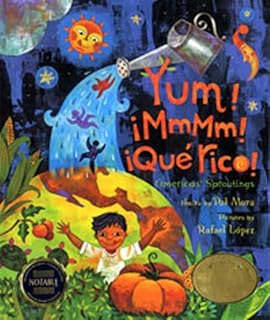
Mora, Pat, and Rafael López. 2007. Yum!
mmmm! qué rico!: Americas’ sproutings. New York: Lee & Low Books Inc.
ISBN 978-1584302711.
Summary/Analysis
This collection of 14
poems by Pat Mora focus on foods that are native to the Americas. There
is no index or table of contents found in the book. The collection of poems are all Haikus (her
first haiku book) and are consistent in both theme and quality. Each poem
features a double page spread illustration by Rafael Lopez that adds depth to
the poem. For the poem “Chocolate” the
illustrations feature a chocolate castle, cake, and a girl eating a chocolate
chip cookie. Each haiku poem
focuses on a different food and is accompanied by a paragraph of expository
text detailing the facts of that food.
Most information about the foods feature the Spanish words giving the
reader a deeper understanding of the food and exposure to a new language.
The poems are simple and easy for younger students to understand and the
topic of food is sure to engage and speak to readers of all ages. The mood of the poems is happy and each
illustration is helpful in reinforcing that feeling. The end of the book has a page with a “Dear
Reader” section. Mora incorporates all of the foods in the poems into a
“fast-clapping” rhyme. She then
discusses why she chose to write a haiku book and why she focused on food.
Use
Vanilla
Quick! Lick white river
running down the cone
cooling
your warm summer laugh.
Before introducing the
poem I would focus on vanilla and read the fact box on the side of the poem
with information about vanilla. If possible I would bring a vanilla pod
and have students smell and come up with as many words to describe the
smell/sensation. After reading the poem
as a class I would break up students into groups and assign them different ice
cream flavors (the poem “Vanilla” is about vanilla ice cream). Each group
would have to write their own haiku about their specific ice cream flavor. A possible extension lesson for social studies could focus on
the Totonac Indians of Mexico and their way of life.

No comments:
Post a Comment